


Performance Statement
Over the six months to 31 August 2026, the IFSL Wise Multi-Asset Income Fund rose by 5.5% (B Income shares, total return). This was ahead of the IA Mixed Investment 40-85% Shares sector, which we use as a comparator benchmark for the Fund and which returned 4.1% over the same period. The Fund also comfortably outpaced inflation, as measured by the Consumer Price Index (CPI) (target benchmark), which rose by 2.0%.
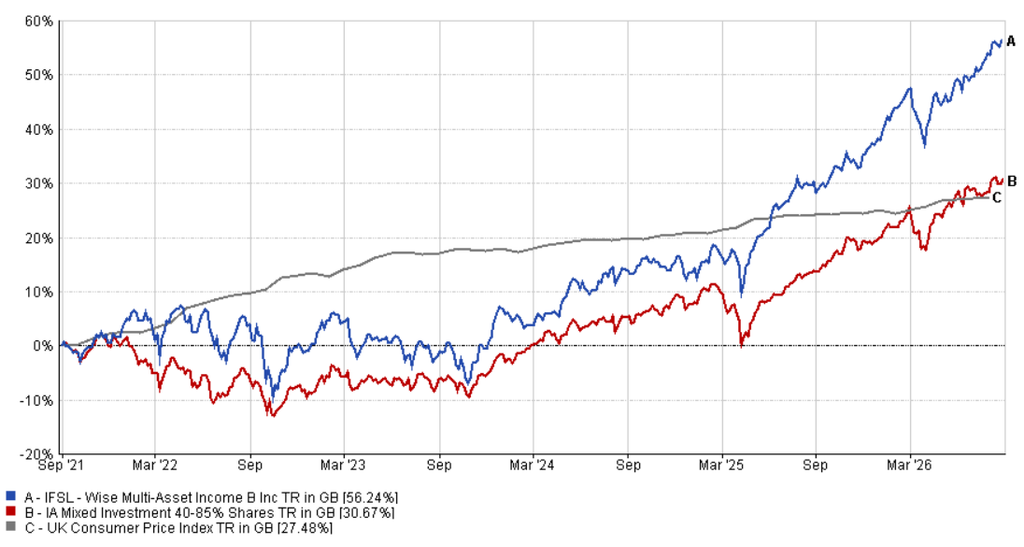
We believe that five years is a more meaningful period over which to assess the success of our investment approach. Over the five years to the end of August, the Fund has returned 56.2%, compared with 30.7% from the IA Mixed Investment 40-85% Shares sector and a 27.5% increase in CPI. We are pleased that the Fund has therefore delivered both significant growth in investors’ capital and a return comfortably ahead of inflation over this period.
The distribution for the six-month period was 3.7p per share, compared with 3.9p in the equivalent period last year, a decline of around 5%. This compares with an increase in CPI of 2.6% over the past year. The Fund’s objective is to grow its income in line with inflation over rolling five-year periods, rather than in each and every reporting period. Distributions over shorter periods can be influenced by the timing of income received from individual investments and by transactions within the portfolio and, therefore, do not necessarily reflect a change in the underlying income-generating ability of the Fund. Over 5 years, the distribution per unit has grown from 5.0p (for the 12-month period to the end of August 2021) to 6.4p, an increase of 28%, in line with inflation over the same timeframe. We expect the lower distribution in the first half of the year to be made up during the second half. The Fund’s forecast yield for the full financial year is currently 4.4%.
Market Review
The past six months have provided another unusually complex backdrop for investors. War in the Middle East, continued disruption to global trade, volatile energy prices, changing expectations for inflation and interest rates, concerns over government finances and the extraordinary scale of investment in Artificial Intelligence (AI) have all influenced markets. Yet, as has often been the case in recent years, economies and corporate profits have generally proved more resilient than the political headlines might have suggested.
The most significant shock came almost immediately at the start of the period with the outbreak of conflict with Iran and severe disruption to shipping through the Strait of Hormuz. Oil prices rose sharply, creating the prospect of another supply-driven inflation shock at a time when central banks had only recently begun to feel more comfortable that inflation was returning towards target. The initial market reaction was severe. Equity markets fell, government bond yields rose and expectations for further interest-rate cuts were rapidly removed. The economic consequences, however, subsequently proved less damaging than initially feared. Energy prices retreated from their March highs, economic activity remained relatively resilient and equity markets recovered much of their initial losses. As the summer progressed, however, the political outlook became less reassuring. The conflict lasted considerably longer than many investors had anticipated and hopes of a negotiated settlement repeatedly proved premature. By the end of August, trade through the Strait remained significantly below pre-war levels and the underlying differences between the US and Iran were far from resolved. There was an interesting parallel with investors’ experience of President Trump’s trade policies during 2025. Markets had become accustomed to what became known as the “TACO trade” — “Trump Always Chickens Out” — whereby an initially aggressive policy position would eventually be moderated when its economic or financial-market consequences became uncomfortable. With the US mid-term elections approaching and the cost of living likely to be an important issue, there are understandable reasons why investors have expected the administration ultimately to seek an agreement that would allow energy prices to fall. There is, however, an important difference. Tariffs could ultimately be imposed, postponed or diluted by President Trump. Iran is an adversary with its own political and strategic objectives. Put simply, when it comes to conflict of this nature, it takes two to TACO. The similarity between the equity-market recovery this year and the tariff-related recovery of 2025 should not, therefore, be taken to mean that the underlying risks are equally controllable.
Trade policy itself remained another source of uncertainty. The most extreme fears surrounding the tariff announcements of 2025 had faded as deadlines were extended, exemptions negotiated and bilateral agreements reached. Nevertheless, tariffs remain substantially higher than before President Trump’s return to office and trade policy has become increasingly intertwined with wider strategic objectives. Businesses have so far proved remarkably adept at adjusting supply chains, absorbing some costs and passing others on to consumers. This resilience has helped to limit the economic damage, but international trade has undoubtedly become more expensive and less predictable.
The combination of higher energy prices and resilient economic activity created a particularly difficult problem for central banks. Importantly, however, this is not quite the same inflation challenge they faced following the pandemic. In 2021 and 2022, supply constraints coincided with exceptionally rapid growth in spending as economies reopened and households and governments deployed the savings and financial support accumulated during the pandemic. Central banks ultimately needed to raise interest rates substantially to cool that demand. Today, the position is rather different. Nominal GDP — a broad measure of growth in spending before adjusting for inflation — is much closer to historically normal levels across most developed economies, while labour markets have generally softened. The current inflation threat is therefore less obviously the result of excessive domestic demand. This leaves central banks with an uncomfortable dilemma. Higher interest rates cannot produce more oil or resolve the conflict in the Middle East, while raising them into relatively subdued domestic demand risks unnecessarily weakening economic growth. On the other hand, policymakers cannot ignore the possibility that a prolonged increase in energy prices feeds into wages and the prices of other goods and services, causing inflation to become more persistent.
This helps explain one of the most striking developments of the period. Before the conflict, investors still expected further interest-rate cuts in several major economies. The surge in energy prices rapidly reversed those expectations, with markets at times contemplating several increases instead. Expectations subsequently fell as energy prices eased and economic data softened, before rising again during the summer as the conflict persisted and inflation remained above target.
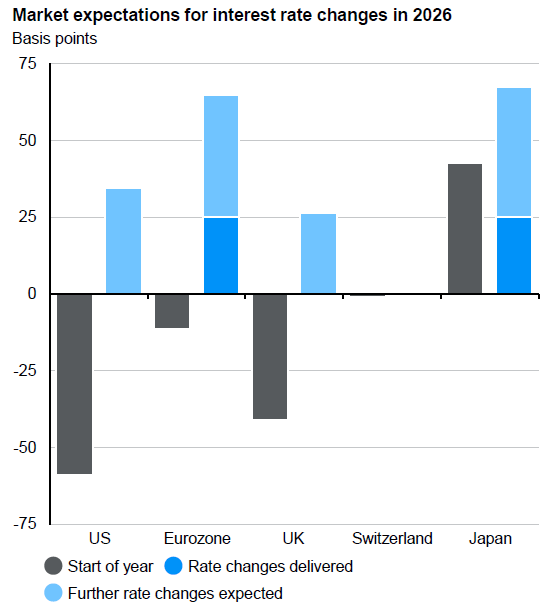
The Bank of England ultimately left Bank Rate unchanged at 3.75% during the period, but the debate within the Bank became progressively more focused on the possibility of tighter policy. Similar tensions were visible in Europe, while Japan continued the gradual normalisation of monetary policy that had already begun after decades of exceptionally low interest rates.
The US Federal Reserve also left interest rates unchanged during the period, despite a significant shift in market expectations about where they might go next. There was, however, considerable change at the Fed itself. Kevin Warsh replaced Jerome Powell as Chair in May and brought a different approach to both monetary policy and communication. Warsh has emphasised the importance of restoring price stability while advocating a “quieter Fed”, with less reliance on providing markets with guidance about the likely future path of interest rates. This potentially leaves investors with greater uncertainty over monetary policy at precisely the time when the inflation outlook has itself become more uncertain. The result is an unusual environment in which stronger economic data are not necessarily welcomed by investors. Resilient growth can increase the likelihood that central banks feel able to raise interest rates to contain inflation, while weaker data can reduce the perceived need for tighter policy. Markets have therefore repeatedly had to reassess whether economic resilience is good news or bad news.
Changing expectations for central-bank policy were only part of the story. Arguably the more significant development was the continued rise in the cost of longer-term government borrowing. Central banks directly determine very short-term interest rates. The return investors require for lending money to governments for ten, twenty or thirty years depends on a much wider range of factors, including expected inflation, the supply of government debt and confidence in the sustainability of public finances. Long-term government bond yields rose substantially during the period. The Iran conflict undoubtedly added to the pressure, but it would be wrong to attribute today’s high borrowing costs solely to the latest geopolitical shock. Long-term yields had already been rising for several years across most developed economies. The conflict has exposed and intensified vulnerabilities that were already present rather than creating them.
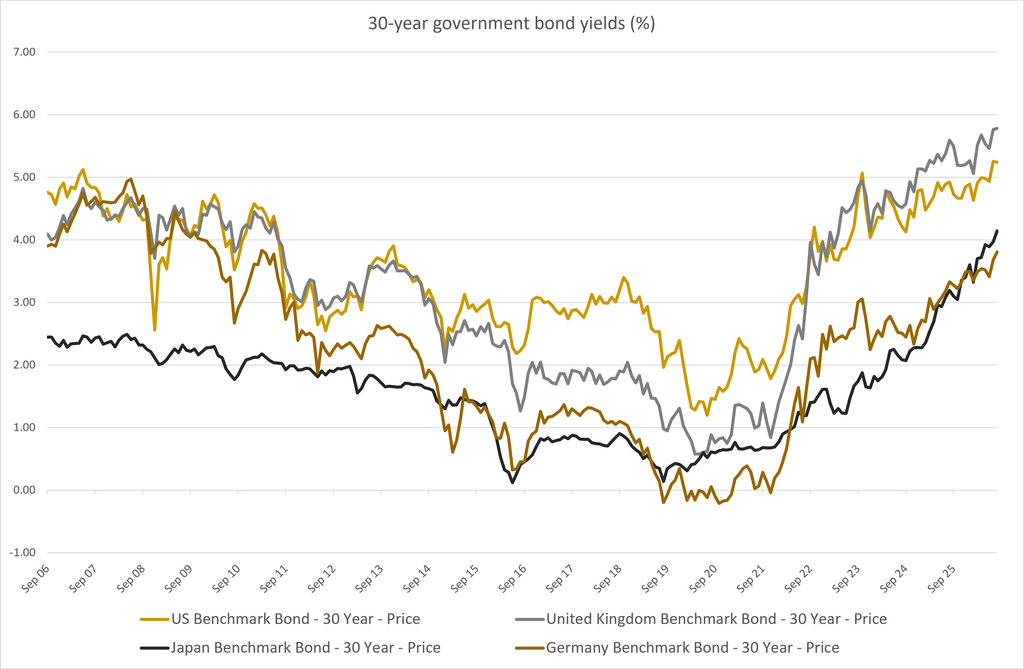
Government borrowing remains high across much of the developed world and debt burdens continue to rise. At the same time, the demands on governments are increasing. Ageing populations, public services and infrastructure all require substantial expenditure, while the deterioration in the geopolitical environment has added another major demand on government finances. President Trump has continued to press NATO allies to assume a much greater share of the cost of their own defence, requiring European governments to increase military spending at precisely the time when many would otherwise prefer to repair their public finances.
There are other pressures on bond markets. Japanese investors have historically been important buyers of overseas government debt because yields available at home were exceptionally low. As Japanese interest rates and government bond yields have risen, those investors have less incentive to send capital overseas. Persistent inflation has also increased the return investors require for committing money for long periods. The investment boom surrounding AI has introduced a further, and somewhat unexpected, source of competition for long-term capital. The largest technology companies are spending extraordinary amounts on data centres, semiconductors, electricity generation and associated infrastructure. Increasingly, some of this expenditure is being financed through bond markets, often at long maturities. These companies are, therefore, competing with governments for some of the same capital supplied by pension funds, insurers and other long-term investors. Whilst this is not the principal reason government bond yields have risen, it adds another source of demand for capital at a time when government borrowing is already exceptionally large.
The consequences extend well beyond the bond market itself. Government bonds provide a reference point against which many other investments and borrowing decisions are priced. As their yields rise, mortgages and corporate borrowing become more expensive, while investors require higher prospective returns from equities, property and infrastructure. Persistently high government borrowing costs can therefore discourage the private-sector investment needed to improve longer-term economic growth. Governments themselves are increasingly having to pay attention to these signals. The US Treasury took steps during the summer aimed at reducing some of the pressure at the long end of its bond market. More broadly, governments that had become accustomed to financing themselves very cheaply are discovering that the bond market can impose constraints of its own.
The UK provides a particularly clear example. The government began the period with limited room for manoeuvre under its fiscal rules and borrowing costs already high relative to many other developed economies. Political pressure intensified following poor local-election results for Labour, with voters defecting in different directions to Reform and the Greens. This contributed to mounting speculation over Keir Starmer’s leadership and ultimately to Andy Burnham becoming Prime Minister during the summer. The change of leadership, however, did not alter the fundamental fiscal position. The government continues to face competing demands for better public services, greater investment, increased defence expenditure and relief from the cost of living at a time when taxation is already high and servicing the national debt has become considerably more expensive. This tension is not unique to Britain. Across much of the developed world, fiscal restraint is becoming economically more necessary at precisely the time it is becoming politically harder to deliver. This makes the relationship between governments and bond markets increasingly important for investors.
Perhaps surprisingly given this backdrop, equity markets remained remarkably resilient. This may feel contradictory, however, the economic outlook for a country and the prospective return from its stock market are not the same thing and uncertainty does not necessarily result in falling asset prices. This was particularly evident in the UK. Despite its political and fiscal difficulties, UK equities performed strongly. Years of investor withdrawals and relative underperformance have left many UK-listed companies trading at relatively low valuations, while a substantial proportion of their revenues are generated overseas. Continued merger and acquisition activity during the period provided further evidence that corporate buyers see value that public markets have frequently overlooked.
At the other end of the spectrum, AI remained one of the dominant forces in global equity markets. The scale of investment in computing infrastructure has been extraordinary and has produced exceptional earnings growth amongst the principal beneficiaries, particularly semiconductor companies. Unusually high profits can make valuations appear more attractive than they really are depending on whether those earnings are sustainable into the medium term. This is particularly relevant in the semiconductor industry, where AI-related demand has pushed profitability well above historic norms. Valuations that look relatively modest on today’s earnings look considerably more demanding when measured against more normal levels of profitability.
Current semiconductor profitability compared with historic ranges
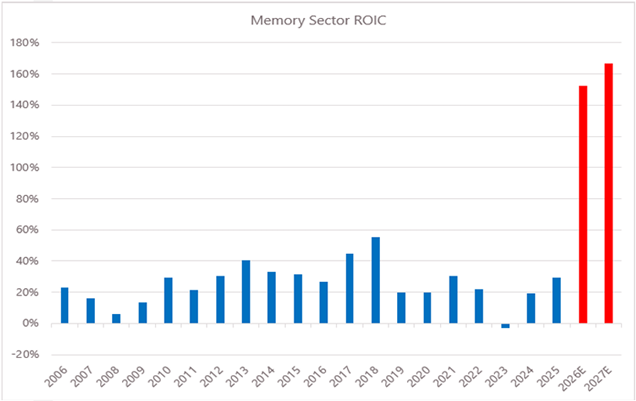
This does not mean that AI is a bubble or that the companies benefiting from it are necessarily poor investments. Many are exceptionally strong businesses and AI may ultimately prove to be as economically important as its advocates believe. The difficulty for investors is determining how much of that future success is already reflected in today’s prices and how sustainable current levels of profitability will prove to be.
This distinction became particularly relevant in Asian markets during the period, where the extraordinary profitability of a small number of semiconductor businesses had an increasingly large influence on both index returns and headline market valuations. For us, valuation is therefore not simply a matter of buying investments with the lowest price-to-earnings ratios or avoiding those with the highest. We are interested in what a business or asset might reasonably earn under more normal conditions, what risks could prevent it doing so and, most importantly, what assumptions are already reflected in the price we are being asked to pay.
Performance Review
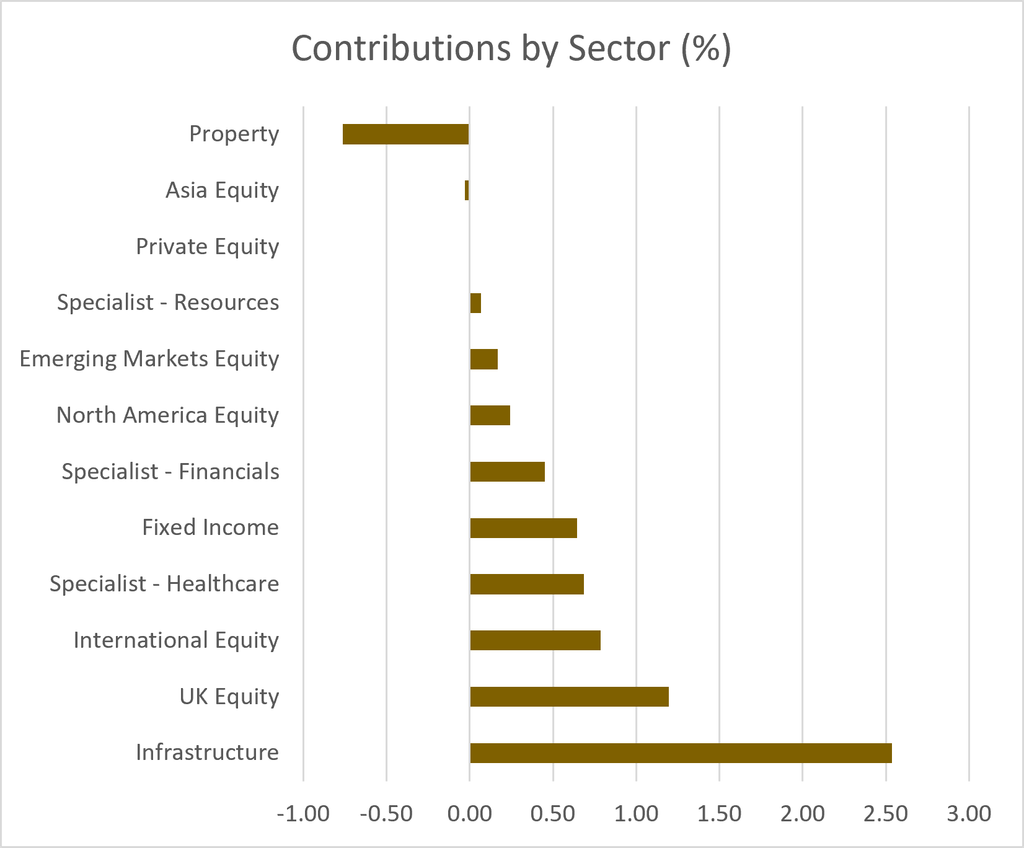
The Fund delivered a positive return over the six-month period, with particularly strong contributions from renewable energy and infrastructure, UK equities and biotechnology. Our bond holdings also made steady progress despite the difficult environment for government bonds. Property was the principal area of weakness, while commodities and private equity produced more subdued returns following stronger performance in the previous financial year.
One of the more encouraging features of the period was that returns came from a broad range of investments rather than being dependent on the areas that have dominated global stock markets. We believe there are times when market indices provide a useful representation of the underlying opportunity set, but also periods when they become unusually concentrated or distorted. In these circumstances, active management and a willingness to invest differently can become particularly valuable.
Investment trusts remain an important part of this approach. Their share prices can trade above or below the value of their underlying assets and, following several difficult years for the sector, we have continued to find opportunities where good assets and attractive income streams can be purchased at substantial discounts. A wide discount is not, by itself, a reason to invest. We look for situations where we believe the underlying assets have been conservatively valued, the income is sustainable and there are identifiable ways in which the gap between the share price and asset value might eventually narrow. These might include asset sales, share buybacks, corporate activity or simply improving investor confidence.
Our renewable energy and infrastructure holdings provided perhaps the clearest example during the period, collectively contributing approximately 2.5% to the Fund’s return. This represented a significant reversal from the previous financial year, when the sector had been one of the Fund’s weakest areas. Foresight Environmental Infrastructure rose 34%, The Renewables Infrastructure Group (TRIG) 21%, HICL Infrastructure 16%and International Public Partnerships 8%. We had increased our exposure after a prolonged period of weakness had left many of these companies offering dividend yields approaching 10% and trading at substantial discounts to their stated asset values. Importantly, our investment case did not depend upon interest rates falling or the discounts disappearing completely. At the prices we were paying, the income alone provided a sufficient component of the prospective return, while any evidence that the underlying assets were worth close to their stated valuations provided additional upside. HICL provides a good example of how this worked in practice. During the period it sold its interest in a French toll road at a 21% premium to the value at which the asset had been held in its accounts. TRIG similarly continued to sell assets as part of its capital-realisation programme, including part of its interest in an offshore wind farm at a valuation materially above that implied by the discount at which its shares were trading. These transactions provided tangible evidence that private buyers were prepared to pay considerably more for the underlying assets than was implied by stock-market prices. Foresight Environmental Infrastructure provided another example. Its underlying asset value was broadly stable, operational performance remained robust and its dividend continued to be comfortably covered, while borrowing remained relatively low. The majority of its 34% share-price return therefore came not from a dramatic improvement in the underlying assets, but from investors becoming less pessimistic and the discount narrowing.
The opportunity is not uniform across the investment trust sector, which makes active selection particularly important. Although discounts have narrowed from their most extreme levels, considerable variation remains between individual companies and sectors. We continue to find opportunities where attractive income is combined with assets trading below what we believe they are worth and clear reasons why that value might eventually be recognised.
We also believe the permanent capital structure of an investment trust can be particularly well suited to holding less liquid assets. Unlike an open-ended fund, an investment trust is not generally forced to sell underlying investments to meet investor withdrawals during periods of market stress. This can be an important advantage when investing in areas such as private equity, property and infrastructure, as well as less liquid parts of the equity market such as smaller companies. It allows the underlying manager to take a genuinely long-term approach, while investors who wish to sell can normally do so by selling their shares in the trust on the stock market.
For these reasons, investment trusts are more than simply a source of discount opportunities within the Fund. In the right areas, we believe their structure can be a particularly appropriate way of accessing specialist and less liquid investments, while the combination of income, underlying value and the potential for discounts to narrow can provide several different drivers of return.
UK equities were another important contributor. Despite the difficult domestic political and fiscal backdrop discussed earlier, many UK-listed companies continue to trade at valuations considerably below comparable international businesses. This is particularly interesting amongst smaller and medium-sized companies, where years of investor withdrawals have left parts of the market relatively neglected. Odyssean Investment Trust, which rose 23.5%, illustrates why we continue to find this area attractive. Odyssean owns a concentrated portfolio of smaller UK-listed companies where its managers believe operational improvement, better capital allocation or corporate activity can unlock value. Importantly, less than a quarter of the revenues generated by its underlying companies come from the UK. Owning UK-listed smaller companies therefore does not necessarily amount to making a large bet on the UK economy. The attraction is instead that these businesses can combine relatively low starting valuations with company-specific opportunities to improve earnings and realise value. This was reflected during the period in both operational progress and corporate activity across Odyssean’s portfolio. Fidelity Special Values and Legal & General also contributed positively, while Paragon Banking Group was a modest detractor despite robust underlying performance. Its loan book continued to grow, arrears remained low and capital generation was strong, leaving our investment case unchanged.
Our international equity holdings also contributed positively, particularly those managed with a strong valuation discipline. Brickwood Global Value rose approximately 10%, while Schroder Global Equity Income and Neuberger Berman Emerging Markets also performed well. These managers invest very differently from their respective indices, generally favouring companies offering attractive valuations, sustainable cash flows and income, while having relatively little exposure to some of the highly valued areas of the market that have benefited most from enthusiasm surrounding AI.
Prusik Asian Equity Income, by contrast, fell 2.7%. This was one of the Fund’s weaker equity holdings, reflecting the divergent performance within broader Asian markets. Asian stock-market returns became extraordinarily concentrated during the period, particularly in the semiconductor companies benefiting from AI-related investment. Prusik deliberately has relatively little exposure to technology and considerably greater exposure to Hong Kong and the emerging economies of South-East Asia, which performed much less well. The scale of the distortion is striking. A year ago, Samsung Electronics and SK Hynix together generated around 5% of the profits of the Asia ex-Japan index. By the middle of 2026 their contribution had risen to more than 30% — greater than the contribution from the entire Chinese and Indian markets combined.
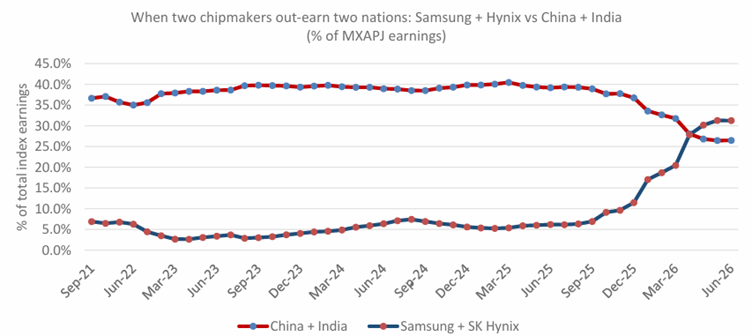
This does not mean that these semiconductor companies are poor businesses or that the AI investment cycle is about to end. It does, however, demonstrate how misleading headline market valuations can sometimes become. Profitability within Asian technology has risen far above its historic range: the sector’s return on equity has recently been around twice its longer-term norm. On current profits it can therefore appear relatively inexpensive, while looking considerably more highly valued if profitability eventually returns towards more normal levels. Prusik’s managers have deliberately chosen not to chase this momentum. Their portfolio instead trades on around eight times earnings and offers a dividend yield of approximately 4.7%, with its returns spread across a much broader collection of cash-generative businesses. This positioning hurt performance during this reporting period, but we believe it provides genuine diversification and remains consistent with our emphasis on income, valuation and margin of safety.
International Biotechnology Trust was another strong contributor, rising approximately 25%. Biotechnology is very different from the value and income investments that make up much of the portfolio, but we believe specialist areas can be attractive when long-term growth prospects are available at sensible valuations. The trust has increasingly focused on later-stage biotechnology businesses where potential new treatments have already passed through some of the riskiest stages of development. This approach was rewarded by continued merger and acquisition activity as large pharmaceutical companies sought new drugs to replenish their pipelines. During 2026 eight companies held by the trust had been subject to takeovers reflecting the value that strategic buyers see and the extent to which large pharmaceutical companies now outsource drug discovery to the biotechnology sector.
Our bond holdings also made positive contributions despite the sharp rise in longer-term government bond yields. TwentyFour Income Fund rose approximately 3%, while CVC Income & Growth returned around 6%. Both invest predominantly in areas where the interest received adjusts with short-term interest rates. The same higher-for-longer interest-rate environment that created difficulties for long-duration government bonds therefore supported the income generated by these holdings. TwentyFour’s underlying portfolio entered the period with a double-digit yield and continued to experience very low levels of credit losses.
Property was the principal area of weakness. The sharp rise in government bond yields following the outbreak of the Iran conflict put pressure on the valuations of income-producing assets and listed property companies sold off heavily. Unite Group, Workspace and Picton Property Income all fell. Performance in the sector, however, was both volatile and varied. British Land (added during the period), for example, rose 19% as strong operational results highlighted continued rental growth, high occupancy and healthy demand across its portfolio. Like-for-like net rental income increased by 6%, occupancy was almost 97% and properties were sold at prices modestly above their stated book values.
Our commodity-related investments were more subdued following their exceptional performance in the previous financial year. BlackRock World Mining rose approximately 5%, while BlackRock Energy & Resources fell slightly. Private equity was similarly quiet, with ICG Enterprise Trust broadly flat and CT Private Equity modestly lower. Both areas continue to provide useful diversification and, in the case of private equity, investment-trust discounts remain wide enough in selected cases to offer potentially attractive longer-term returns.
Portfolio Activity
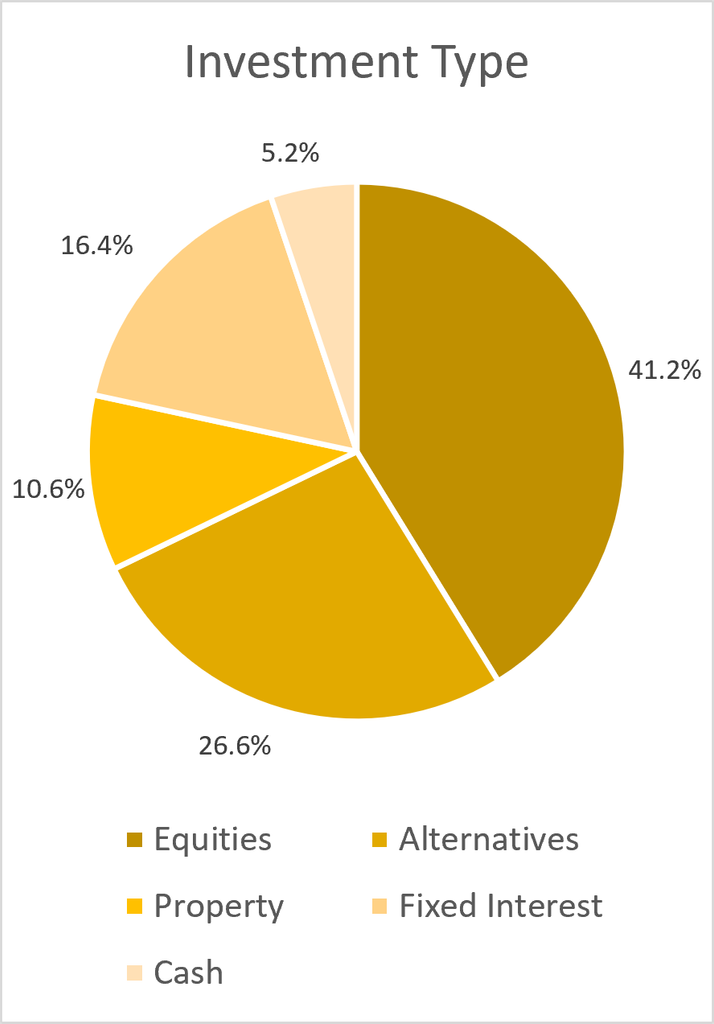
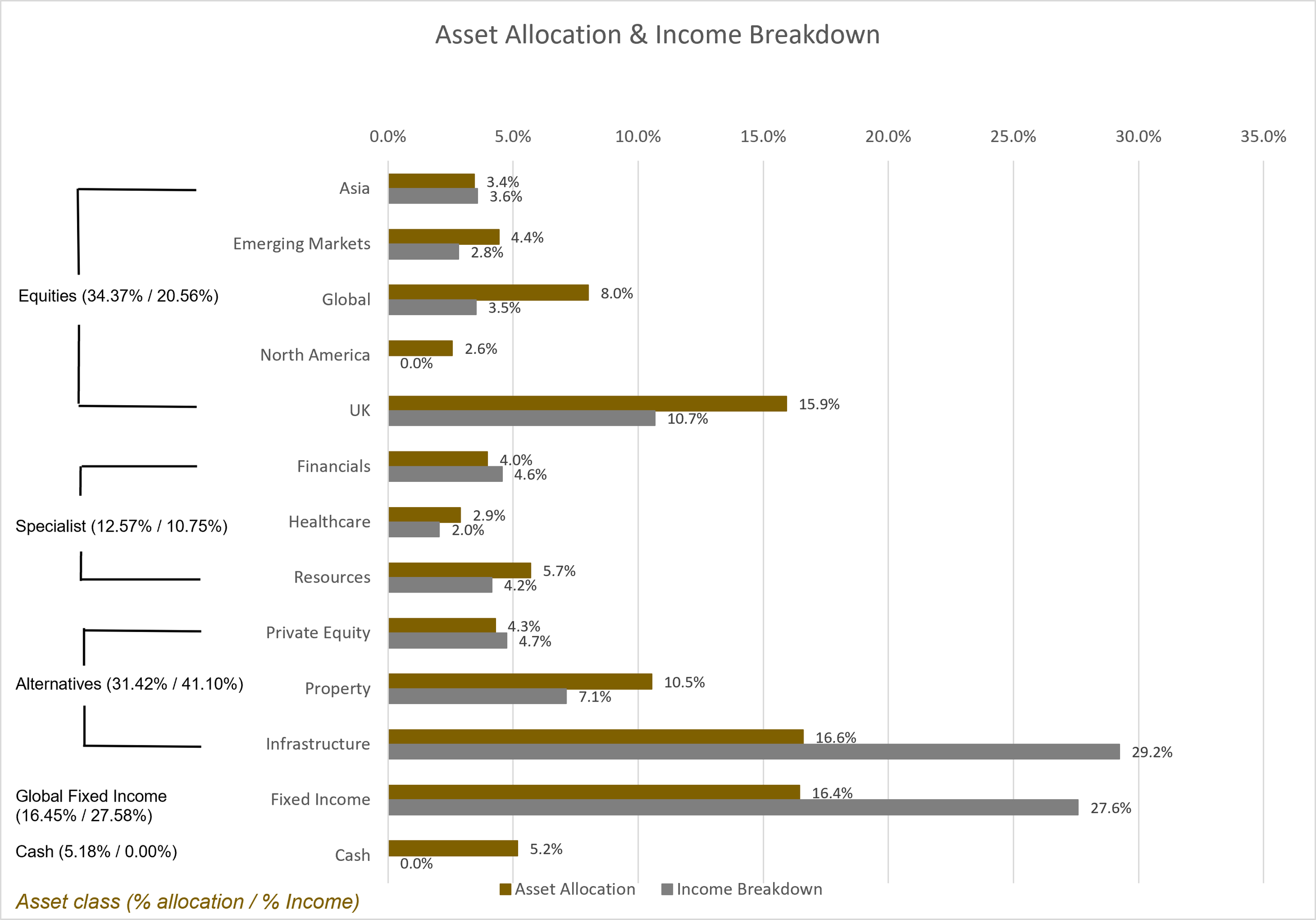
The sharp market moves during the period provided a number of opportunities to adjust the portfolio. In particular, the escalation of the conflict with Iran in March led to significant weakness in several of the areas in which we invest. Rather than making wholesale changes to the portfolio in response to an uncertain economic outlook, we sought to take advantage of the resulting valuation opportunities. As markets subsequently recovered, we also took profits in a number of holdings where some of that value had been recognised.
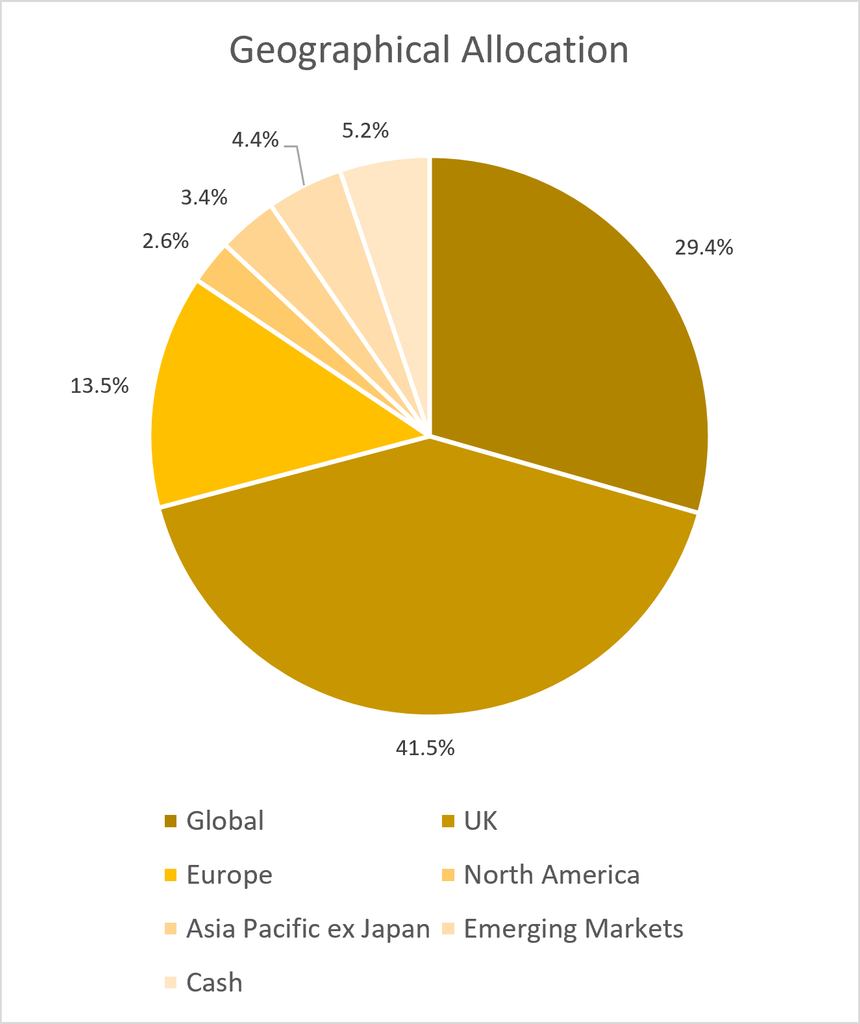
Source: Wise Funds –31st August 2026
One of the larger changes was within infrastructure, where the allocation fell from approximately 21% to 17% over the period. This principally reflected strong performance from a number of the investment trusts that we had previously purchased at unusually wide discounts to their underlying asset values. We reduced holdings including Foresight Environmental Infrastructure, International Public Partnerships, Ecofin Global Utilities & Infrastructure, Pantheon Infrastructure and Bluefield Solar as share prices recovered and discounts narrowed. This reflected our discipline of recycling capital when prospective returns become less attractive. We also initiated a position in VH Global Energy Infrastructure, where we believed the combination of income and the discount to asset value offered a more attractive prospective return.
Within property, by contrast, we increased the Fund’s exposure following significant share-price weakness in March. Rising bond yields put renewed pressure on listed property companies, despite generally resilient underlying occupational markets. We used this weakness to reshape the portfolio, selling our holdings in Unite Group and Workspace (where the operating outlook was more challenged) and introducing British Land, TR Property Investment Trust and, later in the period, Schroder Real Estate Investment Trust. We also added to Helical.
Schroder Real Estate was purchased in August at a substantial discount to its underlying property value and with a dividend yield of approximately 8%. Importantly in an environment of higher interest rates, the company also benefits from relatively low-cost, long-dated debt, limiting its near-term refinancing requirements. There remains significant potential to increase rental income as vacant space is let and existing rents move towards current market levels.
The Fund’s UK equity exposure also increased during the period. We added to Fidelity Special Values during the market weakness and subsequently introduced Finsbury Growth & Income Trust. Finsbury has experienced a prolonged period of relatively weak performance as the high-quality companies favoured by its manager have fallen out of favour compared with faster-growing areas of the market. This has resulted in more attractive valuations across both the underlying portfolio and the investment trust itself. Conversely, we reduced Odyssean Investment Trust following very strong performance, although it remains an important holding. This reflected profit-taking rather than any deterioration in our view of the investment case.
We continued to make changes to our international and emerging-market equity exposure. We increased Prusik Asian Equity Income following a period of weak relative performance. We also initiated a position with Neuberger Berman’s emerging-market value team, whose managers we have followed for many years, while reducing Pacific North of South Emerging Markets Equity Income Opportunities. Elsewhere within equities, we reduced International Biotechnology Trust following particularly strong performance.
Within private equity, we modestly increased our holding in ICG Enterprise Trust. Concerns about the potential impact of artificial intelligence on software companies weighed on sentiment towards the private-equity sector and contributed to the trust continuing to trade at a substantial discount to its underlying investments. We believed these concerns were being applied too broadly to a diversified portfolio and used the weakness to add to the holding.
Finally, within fixed income, changes were relatively modest. We reduced GCP Infrastructure following strong performance and recycled some capital towards TwentyFour Strategic Income and Premier Miton Strategic Monthly Income Bond Fund. The substantial increase in bond yields during the period has improved the income available from fixed-income markets. However, corporate credit spreads (the additional return available from lending to companies rather than governments) remain relatively modest. We therefore continue to favour selective strategies rather than simply increasing our exposure indiscriminately.
Outlook
The past six months have again highlighted the dangers of relying too heavily on economic forecasts. Markets began the period expecting further interest-rate cuts, only for the conflict with Iran and higher energy prices to revive inflation concerns and push expectations towards higher rates. Yet economic growth has remained more resilient than feared and equity markets have continued to rise. Against this uncertain backdrop, we continue to focus on the Fund’s objectives: to provide an annual income in excess of 3% and to grow both income and capital at least in line with inflation over rolling five-year periods.
From an income perspective, the opportunity set remains attractive. Higher bond yields mean fixed-income markets can once again provide meaningful income without necessarily taking excessive credit or interest-rate risk. Infrastructure and property also continue to offer attractive yields, while equities provide the potential for dividends to grow over time. Diversifying these sources of income remains important because they respond differently to changes in growth, inflation and interest rates.
For capital growth, starting valuations remain central to our approach. Global equities have performed strongly and corporate profitability, particularly amongst large technology companies, has been impressive. However, high valuations and increasingly concentrated indices leave less room for disappointment. We continue, therefore, to favour active managers prepared to look different from their benchmarks and to focus on sustainable rather than simply current earnings.
Investment trusts remain an important part of this opportunity set. Discounts have already narrowed significantly across parts of the sector, helped by buybacks, takeovers, asset sales and other forms of capital return. Even so, opportunities remain where good assets can still be purchased below their underlying value. For us, this is not an argument for owning investment trusts indiscriminately. We have reduced several holdings after strong performance and discount narrowing. Rather, the structure gives us an additional potential source of return when attractive income, resilient underlying cash flows and a meaningful discount come together.
Against a continued, unpredictable backdrop, we aim to construct a portfolio with several independent ways of generating a satisfactory return: income from bonds and real assets, dividend and earnings growth from equities, operational improvement and corporate activity within individual companies, and, selectively, the narrowing of investment-trust discounts. The breadth of opportunities currently available gives us confidence in the Fund’s ability to continue delivering an attractive income while seeking to grow both that income and investors’ capital ahead of inflation over the longer term.
I would like to take this opportunity to thank our investors for their ongoing support. The whole Wise Funds team is at your disposal should you have any questions or would like to talk to us.
Philip Matthews
Fund Manager
Wise Funds Limited
September 2026
TO LEARN MORE ABOUT THIS FUND , PLEASE CONTACT
01608 695 180 OR EMAIL JOHN.NEWTON@WISE-FUNDS.CO.UK
WWW.WISE-FUNDS.CO.UK
Full details of the IFSL Wise Funds, including risk warnings, are published in the IFSL Wise Funds Prospectus, the IFSL Wise Supplementary Information Document (SID) and the IFSL Wise Key Investor Information Documents (KIIDs) which are available on request and at wise-funds.co.uk/our funds The IFSL Wise Funds are subject to normal stock market fluctuations and other risks inherent in such investments. The value of your investment and the income derived from it can go down as well as up, and you may not get back the money you invested. Capital appreciation in the early years will be adversely affected by the impact of initial charges and you should therefore regard your investment as medium to long term. Every effort is taken to ensure the accuracy of the data used in this document but no warranties are given. Wise Funds Limited is authorised and regulated by the Financial Conduct Authority, No768269. Investment Fund Services Limited is authorised and regulated by the Financial Conduct Authority, No. 464193.
This presentation is for Professional Clients only and not for re-distribution.
All data is sourced by Wise Funds and any third party data is detailed on the specific page.