


Performance statement
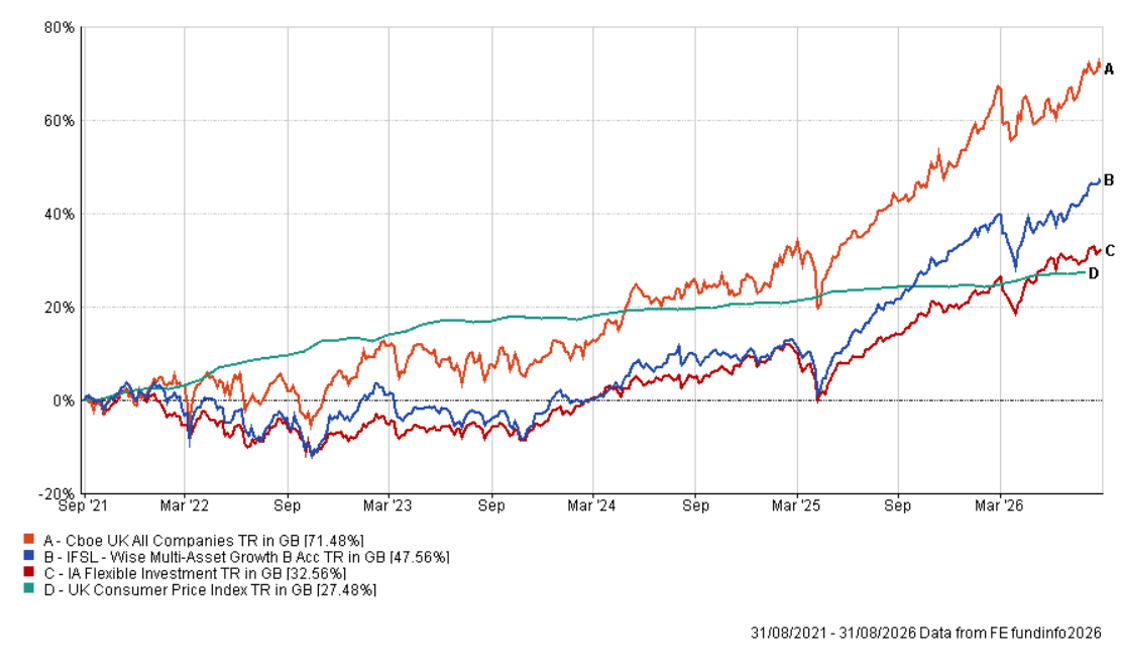
The IFSL Wise Multi-Asset Growth Fund returned 5.3% for the 6 months to the end of August 2026, ahead of the CBOE UK All Companies Index (+1.5%), inflation as measured by the UK Consumer Price Index (+2.0%) and its peer group, the IA Flexible Investment Sector (+4.6%)
Over the 5-year time horizon we consider sensible to look at our performance and as per our objective, the Fund is up 47.6%, behind the CBOE UK All Companies Index (+71.5%) but ahead of the UK Consumer Price Index (+27.5%) and the IA Flexible Investment Sector (+32.6%). The Fund sits in the top quartile of funds in the peer group over that time horizon, which is a pleasing outcome given the broad challenges thrown at investors during the period (such as the Covid pandemic, wars, political changes, dominance of large technology companies, sharp shifts in interest rates and trade wars) and the many headwinds faced by investment trusts (our main focus).
Market Review
The period in review was dominated by the war in Iran launched jointly by the US and Israel on the last day of February. It seemed clear relatively early on that President Trump was taken aback by the Iranian response – bombing neighbouring countries in the Gulf and forcing the first ever full closure of the Strait of Hormuz-, and the US has spent the past 6 months looking for ways to extract themselves from this war of choice without losing face. The situation during the period has fluctuated between full-scale attacks, ceasefires, half-hearted negotiations between parties with no trust for one another and, at the time of writing, the launch of new economic sanctions to try and deprive Iran of vital resources.
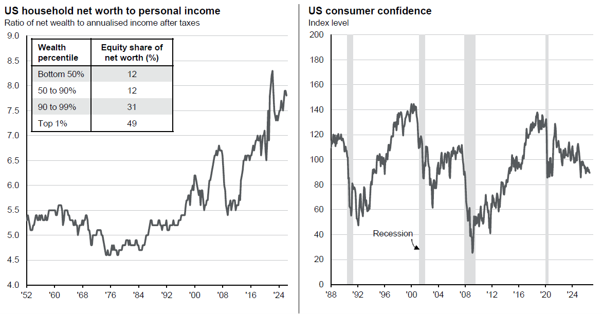
Economically, it is probably fair to say that the consequences of the war have not been as painful as initially feared. The Strait of Hormuz is a vital cog in the logistics of global trade, primarily for energy markets (a fifth of global oil and liquefied natural gas pass through the strait), but also for soft commodities such as fertilisers or helium (used for microchip production). Both energy and soft commodities markets initially spiked to levels not seen since the invasion of Ukraine in 2022 and fuelled fears of a surge in inflation. In reality, while prices are undoubtedly under pressure, inflation has not yet reached levels high enough to cause real alarm. Headline inflation numbers in the US reached 3.4% at the end of the period and 2.9% in the Eurozone, both higher than central banks’ targets and pre-conflict levels (particularly for the Eurozone which is less insulated than the US from fluctuations in global energy prices), but nowhere near the peaks seen after the start of the war in Ukraine (respectively 9.1% and 11.1%). In the UK, where growth remains anaemic, inflation is actually lower now (2.9%) than at the start of the period (3%). Compared to 2022, central banks were more proactive in keeping monetary conditions tighter (i.e. keeping interest rates higher and cancelling planned rate cuts) and consumer demand, at least in the UK and the Eurozone, was already squeezed, limiting firms’ ability to increase prices substantially. More importantly, despite losing a fifth of global output, there has not yet been a genuine physical shortage in energy markets thanks to the use of strategic petroleum reserves, US production being in surplus and China imposing strict consumption restrictions on some of its businesses. While having displayed greater resilience and flexibility than anticipated so far, there is only so long global supply chains can sustain a full closure of the Strait of Hormuz though. Even in the US where headline inflation is higher than recently but not abnormally so, pressure on consumers is starting to be palpable. Having made inflation one of his recurrent attacks against Biden, President Trump now has to face diesel prices being higher than the average during his predecessor’s term. This is increasingly impacting his approval ratings that are now the lowest for both of his terms so far. Despite increasing pressure on the consumer, consumption has remained surprisingly resilient over the period, however. The top 10% of US households by wealth account for 50% of all consumer spending. This is known as the K-shaped economy, with a clear divergence between the richest and the poorest households. The former’s wealth is more dependent on asset (stocks, property) prices than the latter for whom salaries are the main source of income. The richest have thus benefitted greatly from the strength in equity markets recently, helping support their consumption. This is where the contrast between resilient consumption figures and gloomy consumer surveys (asking consumers how they feel about the economy or their finances) comes from, making it necessary to treat broad-based economic figures with caution.
With mid-term elections looming this November, Trump will be looking for some wins over the next few weeks. One area where he is hoping to strike some remains with his tariff policy. After the blanket approach he announced last year was deemed illegal by the Supreme Court, a new, slightly more targeted policy of at least 10% tariff on 60 countries (including the UK, EU and Japan) was announced. At the end of the period, Trump resumed his fight with Canada, but the latter refused the American demands turning the dispute into an economic war between the two neighbours. For a restless president keen to show strength in front of his electorate ahead of the mid-terms, this turned out to be a blow.
For Canada, pushing back is also fraught politically and economically. Another leader who will be looking for some wins in the short-term is the new British Prime Minister, Andy Burnham, the 7th PM in the last 10 years. His policies are not yet fully formulated but it is likely that markets will not give him an indefinite grace period. The first Budget of the new government in the autumn will surely be critical.
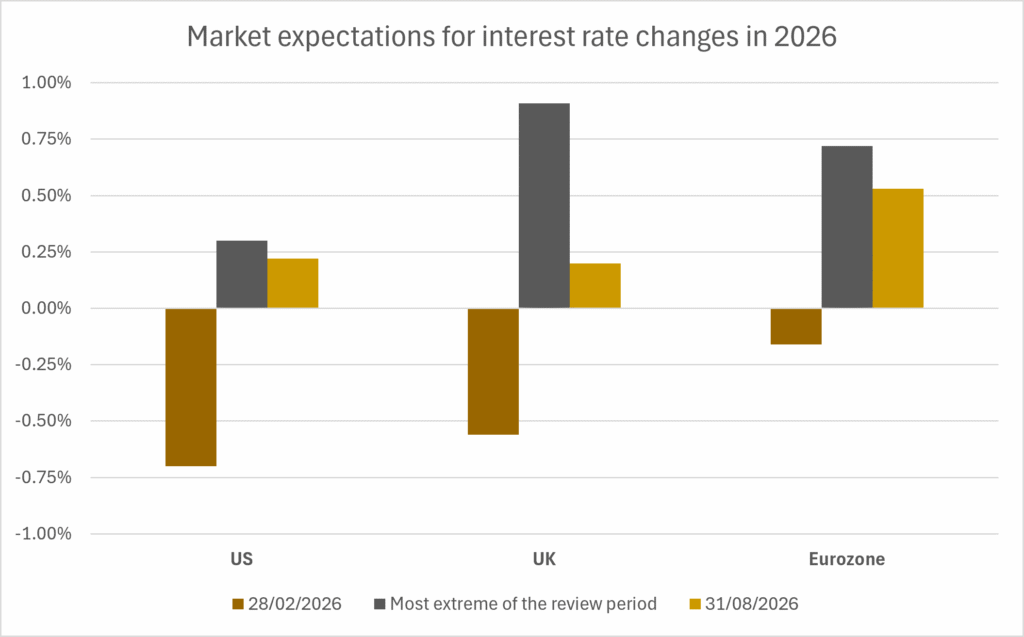
In an environment where paths for growth and inflation are difficult to forecast with confidence, central banks in developed countries have generally been on the cautious side, delaying expected rate cuts that were priced in for 2026, or raising rates in the case of the European Central Bank. The Iran war led to volatility in the bond market as investors struggled to price in the duration and the impact of the conflict on the global economy. As a result, interest rate expectations shifted brutally over the period from 3 rate cuts of 0.25% priced in for 2026 in the US at the end of February to one rate hike at the end of August. In the UK, the shift went from two rate cuts to almost 4 rate hikes at its worst before settling at one rate hike, and in Europe from one cut to two hikes (one of them having been delivered in June).
Volatility was not confined to short-term rates, however, and long-term borrowing costs showed worrying signals too. The yields on sovereign bonds are an indication of the interest investors are willing to accept in exchange for lending money to a government. They are a function of a number of factors such as the expected future path of short-term interest rates fixed by central banks, future inflation expectations, future growth prospects, the likelihood of the government repaying its debt and the maturity of the bond (the longer the maturity, the more uncertainty about future events, requiring extra compensation). In August, the yield on 30-year US bonds pushed through recent levels to the highest in almost 20 years. While this is the move that grabbed headlines, long-term government bond yields have been rising rapidly across developed countries over the past few years to reach levels not seen for decades: Germany’s 30-year government bond yields are the highest since 2011, France’s since 2008, the UK’s are close to levels last seen in 1998 and Japan’s are close to all-time highs. While a strong recovery in growth, particularly since the Covid crisis, explains part of this rise, the main drivers of late have been an uncertain inflationary outlook due to the ongoing war in Iran and, maybe more importantly, worries from bond investors about fiscal irresponsibility from governments. In the US, the national debt reached a record $40 trillion at the end of the period with a staggering $3 trillion added in the last year alone due to a ballooning federal budget deficit (when government spending outpaces its tax revenues). The US government now spends roughly $1 trillion annually purely on interest payments, which makes it a larger expense than the entire defence or healthcare budget.
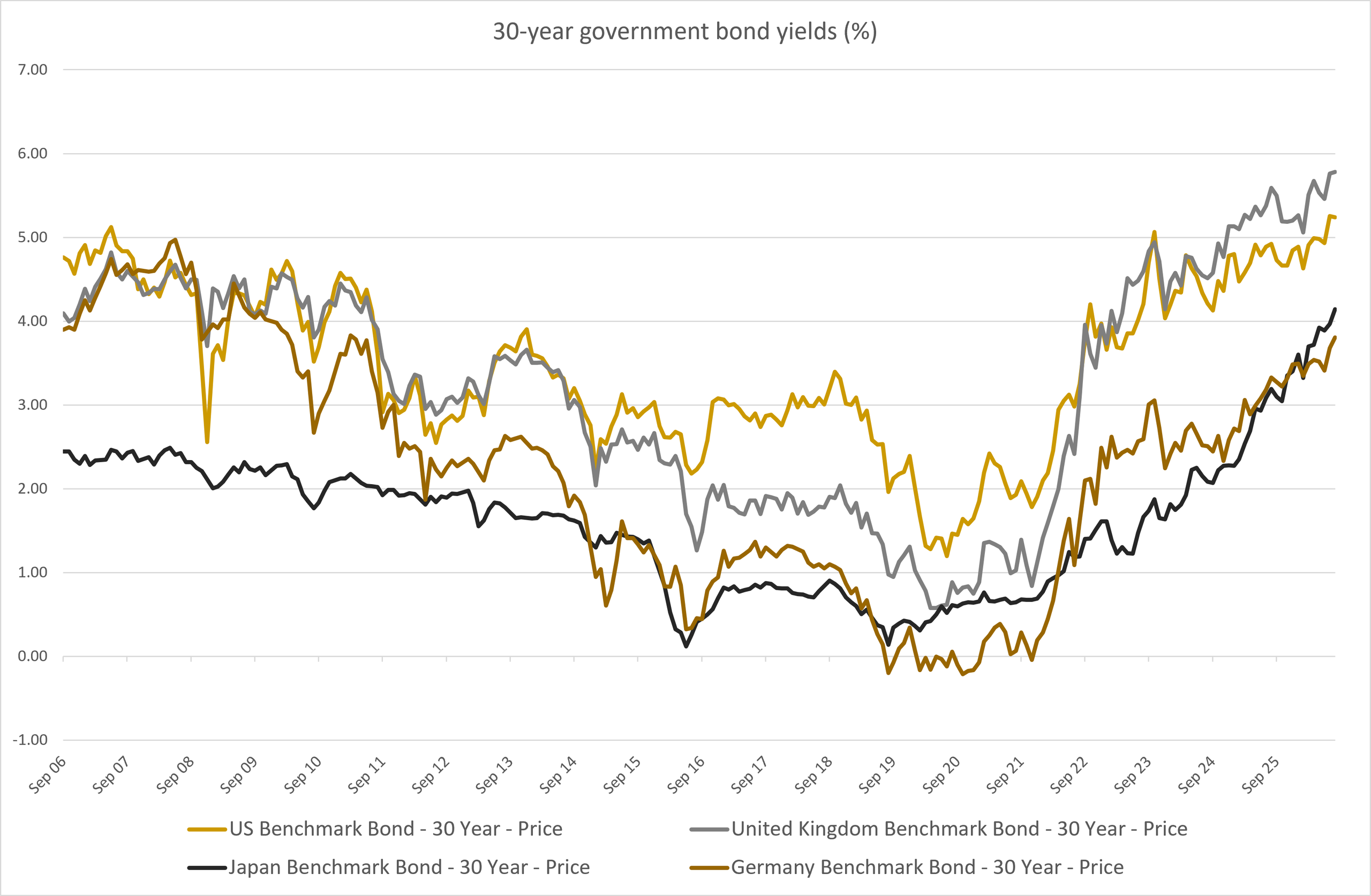
Long-term government bond yields are not just of interest to economists, they matter for investors too on two levels. Firstly, higher bond yields make riskier assets such as equities less attractive by comparison. Secondly, bond yields are a reflection of investor confidence and rapidly rising yields like we have seen recently suggest nervousness in some quarters of financial markets. They also have real-life impacts on consumers, notably on loans and mortgages, which may impact their ability and willingness to spend elsewhere. In August, the US Treasury suggested it was getting concerned about the level of long-term government bond yields and announced measures to increase its purchase of 30-year bonds (thus trying to push the yield down) while selling some shorter-dated bonds. It failed to have the desired effect so far, not only because investors tend to dislike government interventions, but also because it is now putting the US Treasury and the US Central Bank (the Fed) at odds. The new Fed chairman has made it clear that he wants the market to find suitable levels on its own, without constant forward guidance or intervention from the Fed. It is also increasingly concerned about inflation and this could be further fuelled by the Treasury’s actions. All of this makes it a tricky environment for investors.
The picture in the bond market contrasted with the one painted by equity investors during the interim period. On the whole, equities performed strongly, looking through the macroeconomic noise to focus on record reported earnings, booming merger and acquisition (M&A) activity and the strength of the AI story. Over the next 6-12 months, unless interest rates must be raised significantly, equity investors are content with the current environment where modest inflation boosts company earnings and rates aren’t punitive enough to cap growth too much. The whole market was carried forward by AI companies which continue to drive investment, spending and earnings. Focus shifted, however, from the AI hyperscalers (the cloud computing companies such as Meta, Alphabet, Amazon that operate networks of data centres) to the picks-and-shovels companies (the chip manufacturers and companies providing the infrastructure for the development of data centres) over the period. While it is undeniable that AI will create a revolution, it is too early to know who will win the race, how AI will be utilised and how much computing power will be required in years to come. Investors are thus increasingly getting wary of massive capital expenditure programs from hyperscalers without visibility on future returns. They are much more comfortable with the companies that benefit immediately from all the spending. That said, with valuations being pushed increasingly higher, even those names are not immune to volatility and technology names recorded a correction (the term used to describe a drop of more than 10% from the previous peak) during the summer, amplified by the forced selling of a large hedge fund with high leverage and poor risk management. They recovered their losses subsequently. Outside of AI-related companies, there seems to be a tentative broadening out of performance to other sectors and across the market capitalization spectrum. This was particularly the case in the UK where AI names are a rarity, but where smaller companies recorded a strong half year, boosted by cheap valuations and a flurry of acquisitions, mainly from foreign competitors keen to grab a bargain. Total deals involving UK targets remain below record levels but are up more than 200% since last year. Foreign takeovers of UK companies are at a record high, however, with US bidders representing more than half of all transactions. This level of activity, while potentially damaging long-term because it reduces the number of companies trading in the UK, is a sign that valuations are dragging interested parties in, which should continue to help improve returns in the UK listed market. Encouragingly, the M&A activity is spread out across sectors rather than concentrated on a few, thereby highlighting the value on offer domestically.
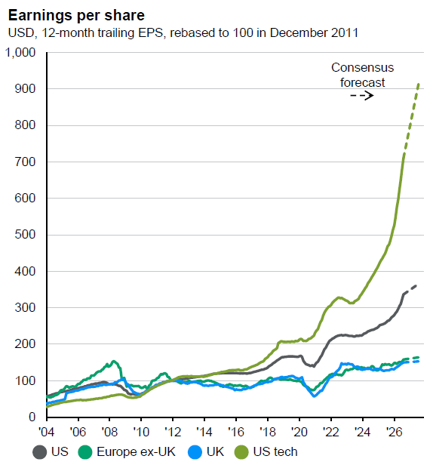
In this context, despite the dominance of AI-focused companies on overall equity returns, value names continued to hold their own versus growth ones outside of the US. In the latter, the picture is widely distorted by AI still. For example, 40% of Q2 earnings growth for the whole US market came from the gains that Microsoft, Amazon and Alphabet made through their stakes in three private AI companies (Anthropic, OpenAI and SpaceX). Excluding those, earnings would still have grown above historical average, but it shows how skewed some markets are. Parts of Asia such as South Korea and Taiwan saw similar concentration characteristics but, in the rest of the world, value performed on par with growth for most of the period before eventually outperforming when technology names suffered their summer correction. This is a sign of a healthy market, leaving the door open for stock pickers to add value.
Fund Performance Review
The Fund delivered a return of 5.3% for the review period, mainly driven by fund selection. That said, one theme that continued to contribute positively to performance is our exposure to the biotechnology sector. We have talked in detail about this sector in recent reports but, in summary, the sector suffered its worst period of underperformance following the hangover from the Covid vaccine excitement. It also struggled with the uncertainty created by the new Trump administration with regards to anti-vaccine stances, cuts to research budgets, tariffs, and changes at the head of the health administrations. However, innovation in the sector remains as strong as ever (70% of new drugs approved come from biotechnology companies now), drug approvals have accelerated rather than slowed as feared, and M&A activity continues to accelerate driven by large pharmaceutical companies having no other option than acquiring drugs in order to replenish their expiring patents. 2025 was a record year for M&A in the sector but the first half of 2026 is already outpacing it. Similarly, IPOs (when a company goes public in the stock market) are close to double last year’s total since January. Crucially too, all of them remain above their listed price, which is an indication that sentiment remains positive. Our top performer in the sector, International Biotechnology Trust saw 25% of its portfolio acquired over the last 12 months. Equally, RTW Biotech Opportunities had 6 of its holdings acquired in 2026 alone so, not only is the biotechnology sector performing well but our managers’ ability to pick attractive stocks is bearing fruit.
Following a similar narrative in the UK smaller companies sector, our position in Odyssean also contributed strongly, helped by the acquisition of two of its large holdings and a return of cash from another. Operationally, its companies are also delivering and the trust is starting to benefit from a trough in negative sentiment on UK small companies. Encouragingly though, despite returning 24% over the period (mainly through its Net Asset Value -NAV- performance rather than any discount movement), the managers continue to find a lot of attractive opportunities in the space and are still deploying capital.
Despite being cautious about the AI theme and the valuations some investors are pushing prices to, we are not insulating ourselves completely from tech companies, provided we can find attractive ways to access them without overpaying. This was the case with RIT Capital Partners for example which can access well-known AI companies such as SpaceX, OpenAI and Anthropic via private markets. Despite huge volatility after its IPO in June, SpaceX was a good illustration of how early private investors like RIT can crystallise their gains through public markets and one would hope that something similar will happen with OpenAI and Anthropic (both expected to IPO over the next few months). The board of the trust also took an aggressive stance to reduce the discount during the period, buying back £300m of its shares on top of the £378m already bought back in the past three years. This drove the discount from more than 25% to 16% over the period. Another indirect play on AI which contributed in the last 6 months was Mobius Investment Trust, a trust focused on smaller companies in emerging markets where engagement with management can release value. The trust had a difficult period in 2025 in a market driven by large companies, but its exposure to AI-beneficiaries across a range of sectors helped drive a 20% return over the period. The reason why we find this approach attractive is because they are embracing AI but look for less conventional ways than large cap semiconductor companies to play the theme. They are also active in the management of the portfolio and have aggressively reduced their exposure to the hottest areas such as software in recent months.
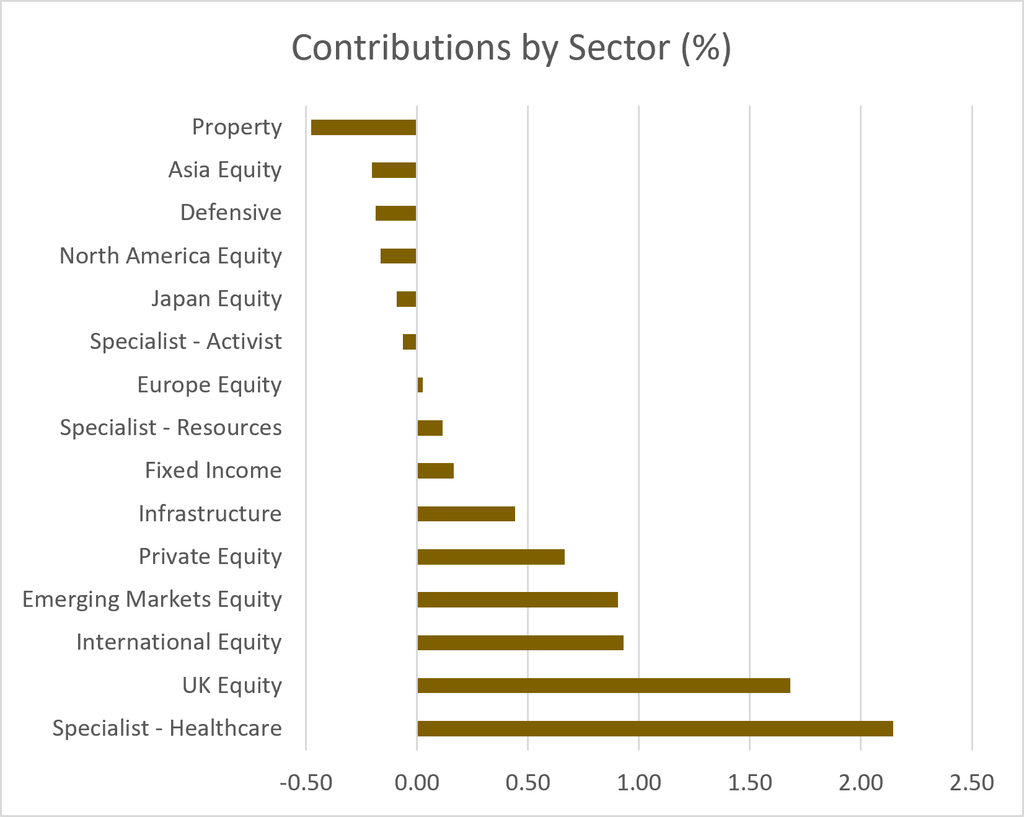
Our detractors also came from varied sources. TR Property faced headwinds due to higher bond yields as the property sector’s financing needs are correlated to interest rates. The bulk of its poor performance came in March following the start of the war in Iran. The trust is yet to recover despite generally positive growth in the sector helped by supply shortages and solid demand, while M&A is aggressively picking up to consolidate the sector. Fidelity China Special Situations, a small position in the Fund, struggled alongside the Chinese equity market where consumer demand remains anaemic in the face of a debt crisis that the government is yet to find a solution to. Industrial production is strong and growth stable, however, with Chinese companies continuing to be at the forefront of global innovation while valuations are cheap, so we think it is sensible to keep some exposure there. Finally, Jupiter Gold & Silver fell after the very strong performance of the previous two years. Gold gave back some of its gains as the momentum that fuelled the doubling of its price over that period faded. It also faced the headwind of higher bond yields and the threat of higher interest rates which, for a non-yielding asset, create competition for capital. Interestingly though, at the end of the period when higher yields moved to being driven by fiscal concerns and the ability of governments to service their ballooning debt rather than growth and inflation, gold rebounded as did the Jupiter fund (by 30% in August alone), which shows the benefits of holding such an investment for diversification purposes.
Portfolio activity
We were reasonably active with our Fund positioning through the period with three new positions added. Firstly, we initiated a position in Finsbury Growth & Income in March. Quality growth managers have had a torrid time for the past couple of years after a decade and a half of great performance. We think that valuations are looking more reasonable now (on the underlying assets and the trust itself), which could make companies with durable competitive advantages attractive again. We subsequently added to the position and it was pleasing that earnings reports from some of its large software holdings later in the period helped put fears of AI cannibalisation at bay. In April, we added a position in the Neuberger Berman Emerging Markets Equity fund, a newly launched strategy managed by the former Schroders Emerging Markets team, whose departure in 2025 had forced us to exit the fund at the time. As in their previous vehicle, this is a differentiated value strategy in emerging markets and is particularly attractive at present given the sharp discrepancies across the region between expensive parts of the market (typically linked to semiconductors and technology) and more cheaply valued ones. Finally, in August, we added a new position in the MIGO Opportunities Trust, now managed by the AVI team we have invested with for years. After a few months of transition since taking over the mandate, this trust is now best seen as a portfolio of special situations in the investment trust sector, actively looking for mispricing opportunities and engaging with management. It is complementary to the AVI Global Trust we already own although the latter is applying their approach to a wider universe including asset-backed and family-controlled holding companies and tends to invest in larger global companies.
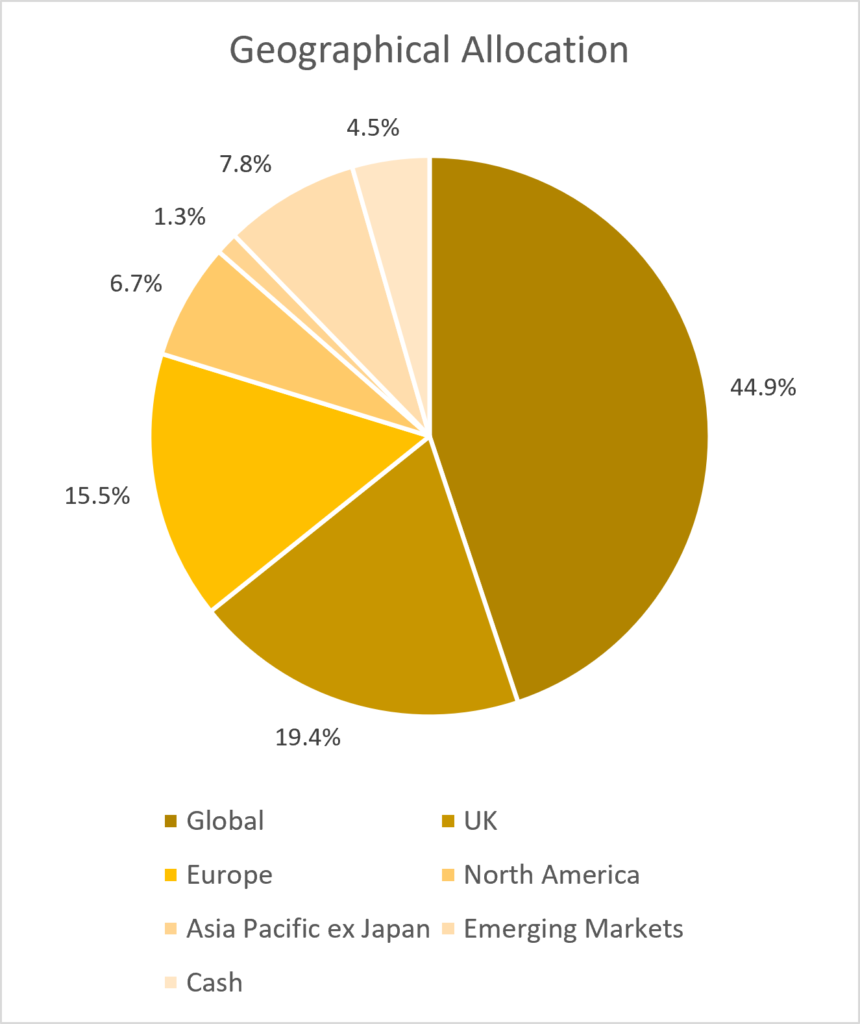
Source: Wise Funds- 31st August 2026
On the other side of the scale, we exited some of our strong but small performers, such as AVI Japan Opportunity to raise cash for more attractively valued opportunities. We also sold three of the infrastructure and renewables trusts we held in a basket. Those generally performed well following asset realisations and what appears to be a trough in valuations. As the MIGO Opportunities Trust’s largest exposure is already in these sectors, we are keen not to become too overexposed.
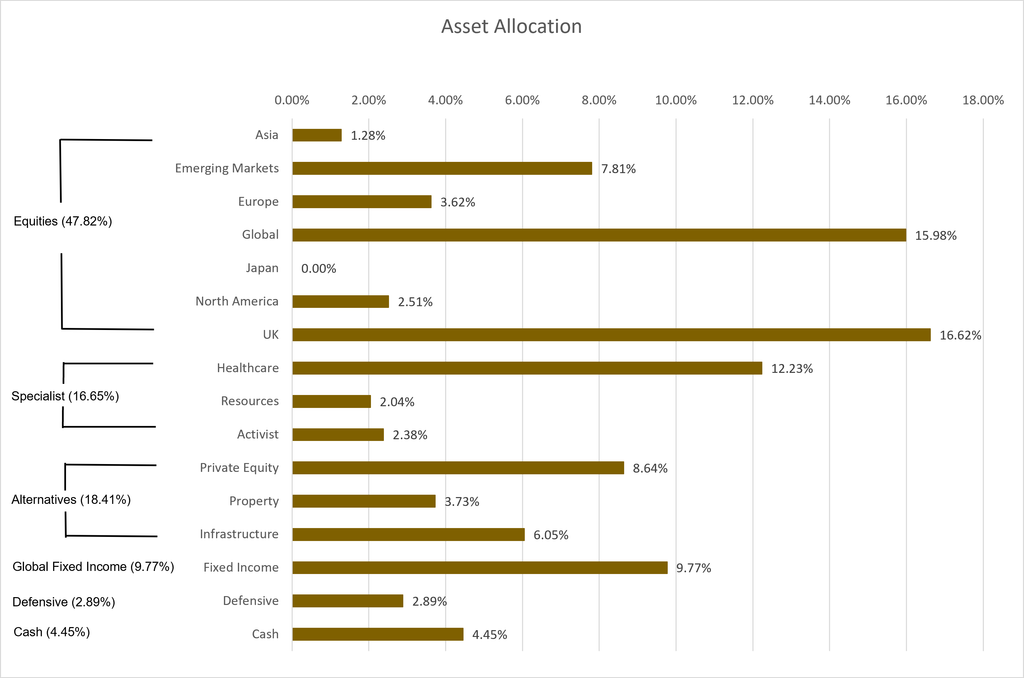
From a sector perspective, the changes above led to an increase in our UK equity and emerging markets allocations, and a reduction in our direct infrastructure and Japanese exposures. As the period went on, with increasing discrepancies between messages coming out of the bond and equity markets, we also increased our cash levels by about 1% to end the period at 4.5%. While not indicating a huge degree of nervousness, this is allowing us to have cash ready to be deployed were volatility to pick up in the coming months.
Finally, while not necessarily apparent at sectoral levels, we were, as always, active with rebalancing positions from outperformers to underperformers, thus maintaining valuation scales tilted in our favour. Such examples include switching from Pantheon International to ICG Enterprise, Oakley Capital and HG Capital in private equity; rotating from Odyssean to Aberforth Smaller Companies, Fidelity Special Values and Man Undervalued Assets in UK equities; trimming Mobius and Templeton Emerging Markets in favour of the new Neuberger Berman fund; taking profits in International Biotechnology Trust and RTW Biotech Opportunities; and adding to Pershing Square in the US, TR Property, and CVC Income and Growth in the bond space.
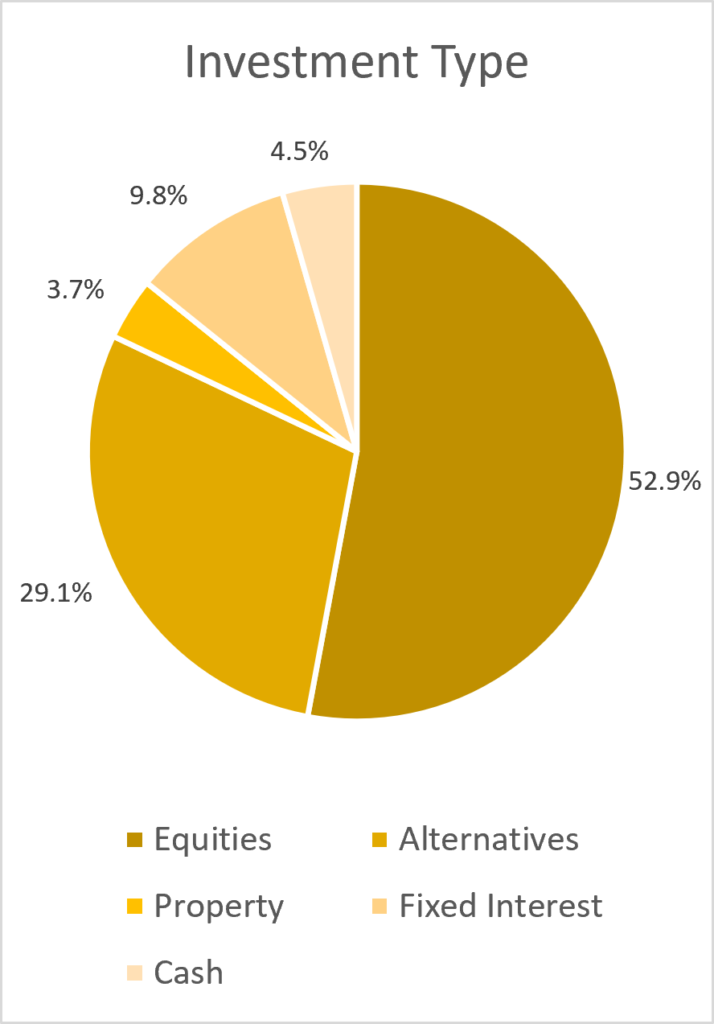
Source: Wise Funds – 31st August 2026
Investment Outlook
The current geopolitical situation dominated by the war in Iran with no apparent end in sight and an increasingly belligerent US administration (both militarily and economically), continue to make it difficult to read the macroeconomic tea leaves. Although an important component of our strategy, we are luckily not dependent on doing so and our focus remains on finding outstanding managers who benefit from valuation tailwinds. The main message we are taking from the present macroeconomic murkiness is that fundamentals are strong but that complacency risks are rising, thus suggesting a degree of caution. We are reassured by the fact that many parts of the market continue to present, not only relative, but also absolute value, having been left behind in the AI rush. We are seeing the early signs of a rotation towards those areas by the broader investment community, and we think we are well positioned to take advantage of it. High valuations and concentration levels are likely to create some volatility, however, hence our slightly elevated cash levels, ready to be put to work in future periods of weakness.
I would like to take this opportunity to thank our investors for their ongoing support. The whole Wise Funds team is at your disposal should you have any questions or would like to talk to us.
Vincent Ropers
Fund Manager
Wise Funds Limited
September 2026
TO LEARN MORE ABOUT THIS FUND , PLEASE CONTACT
01608 695 180 OR EMAIL JOHN.NEWTON@WISE-FUNDS.CO.UK
WWW.WISE-FUNDS.CO.UK
Full details of the IFSL Wise Funds, including risk warnings, are published in the IFSL Wise Funds Prospectus, the IFSL Wise Supplementary Information Document (SID) and the IFSL Wise Key Investor Information Documents (KIIDs) which are available on request and at wise-funds.co.uk/our funds The IFSL Wise Funds are subject to normal stock market fluctuations and other risks inherent in such investments. The value of your investment and the income derived from it can go down as well as up, and you may not get back the money you invested. Capital appreciation in the early years will be adversely affected by the impact of initial charges and you should therefore regard y our investment as medium to long term. Every effort is taken to ensure the accuracy of the data used in this document but no warranties are given. Wise Funds Limited is authorised and regulated by the Financial Conduct Authority, No768269. Investment Fund Services Limited is authorised and regulated by the Financial Conduct Authority, No. 464193.
This presentation is for Professional Clients only and not for re-distribution.
All data is sourced by Wise Funds and any third party data is detailed on the specific page.